Paolo Bonavera
01 December 2025 • Paolo & Julieta • SEO & Growth
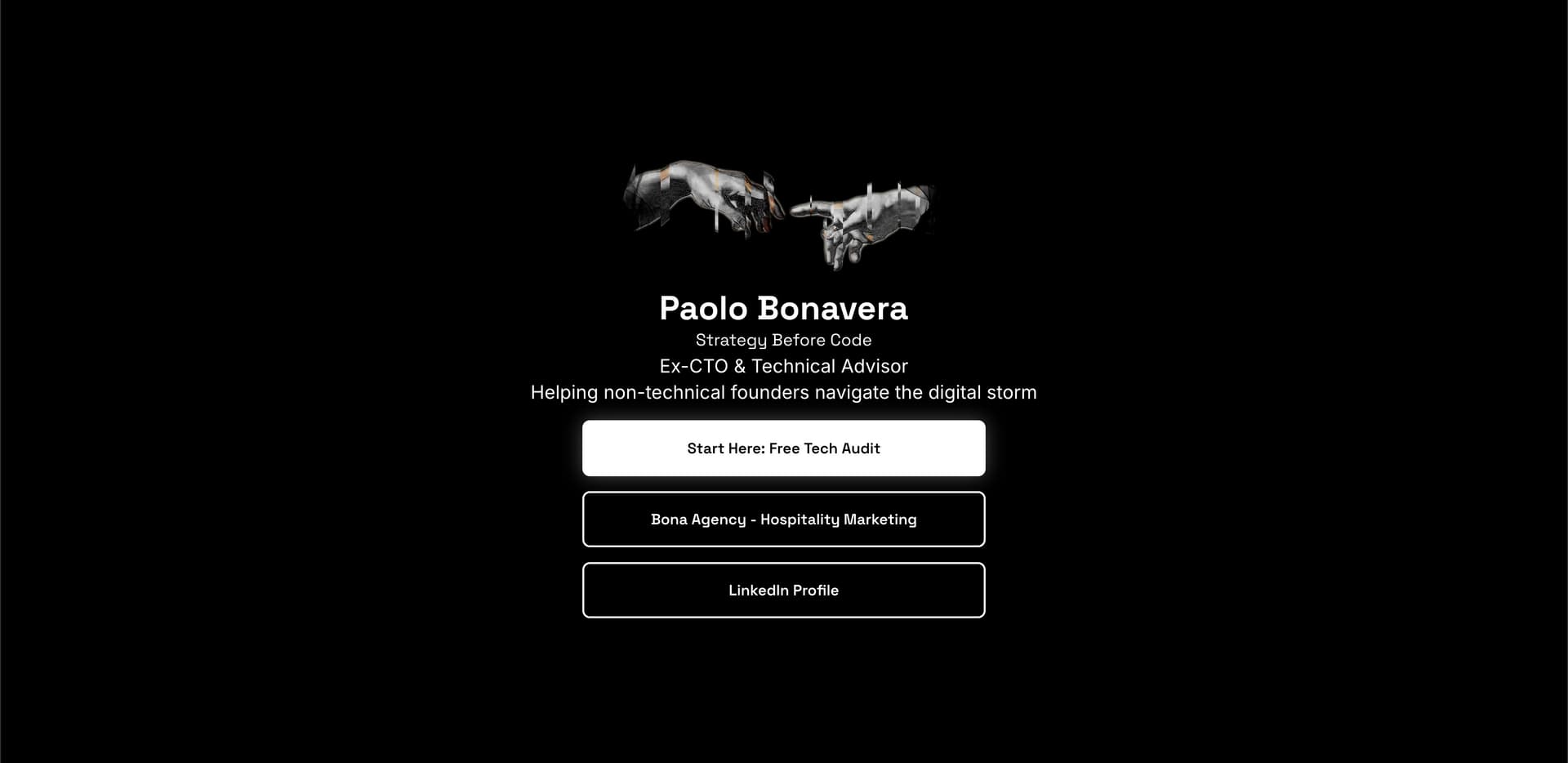
As a developer managing multiple projects, client relationships, and professional roles simultaneously, I faced a problem that's increasingly common in the modern work landscape: my professional presence was fragmented. GitHub profile here, LinkedIn there, different contact methods for different contexts, and no central place where people could understand the full scope of what I do or easily schedule time to discuss projects. I needed a unified digital presence—but I also needed it now, not six months from now when I might have time to build a complete portfolio.
The Fragmented Professional Identity Problem
Developers, designers, and multi-role professionals often operate across numerous contexts: employed full-time while freelancing, contributing to open source while building side projects, teaching while consulting. Each role has its own communication channels and touchpoints. Potential clients find you on one platform but can't easily see your full capabilities or book time to discuss opportunities.
Here's what made my challenge specific: I needed something professional enough to represent all my work, functional enough to actually serve business needs (like appointment booking), simple enough to build and maintain alongside active client projects, and flexible enough to evolve into a complete portfolio when time allows. Most solutions optimize for one or two of these—rarely all four simultaneously.
The Link Hub Strategy: Fast Value, Future Foundation
Why Start with a Link Hub
Link-in-bio tools like Linktree serve a purpose, but they're generic—everyone's looks similar, customization is limited, and they don't feel like professional developer work. Building a complete portfolio site would take weeks I didn't have while client projects needed attention. A custom Next.js link hub offered the middle path: professional, functional, mine, and buildable quickly.
Strategic Thinking
This wasn't settling for less—it was strategic phasing. Build something genuinely useful immediately that also serves as technical and design foundation for future expansion. When time allows for a complete portfolio, the infrastructure, hosting, domain, and basic brand presence already exist. I'm not starting from zero—I'm expanding what works.
Professional Credibility
Even a simple site signals something important: I control my digital presence rather than relying entirely on third-party platforms. For a developer, a custom-built presence (however minimal initially) demonstrates technical capability and attention to professional presentation.
Technical Foundation: Next.js for Speed and Scale
Why Next.js for a Link Hub
Using Next.js for something as straightforward as a link hub might seem like overkill—but it's strategic. Next.js provides: fast development with modern React patterns, excellent performance out of the box, easy deployment and hosting options, and most importantly, a foundation that scales from simple to complex without requiring platform migrations.
Server-Side Rendering Benefits
Even for a simple link hub, SSR matters. Search engines fully crawl and index the site, social media platforms properly generate preview cards when links are shared, and page loads are instant. These technical advantages cost nothing extra when using Next.js—they're built in.
Development Efficiency
With Next.js, I could build the entire hub in a focused session: set up the project and routing, design and implement the UI, integrate appointment booking, deploy to production. The modern development experience meant spending time on functionality and design rather than wrestling with tooling.
Design: Simple, Modern, Functional
Clean Interface Priorities
The design philosophy was ruthless simplicity: clear hierarchy showing name and professional summary, organized sections for different types of links (projects, profiles, contact), consistent visual treatment without unnecessary decoration, and obvious interactivity—visitors immediately understand what's clickable.
Modern Aesthetic
Simple doesn't mean generic. The design uses: thoughtful typography establishing professional tone, subtle spacing and layout creating rhythm, purposeful color choices (limited palette, strategic emphasis), and smooth interactions that feel polished without being flashy.
Mobile-First Approach
Most people share and access link hubs on mobile devices. The design prioritizes mobile experience: large, easily tappable link buttons, readable text without zooming, fast loading on mobile connections, and vertical scrolling that feels natural on phones.
Functional Integration: Appointment Booking
Why Booking Integration Matters
A list of links is useful, but appointment booking transforms the site from passive directory to active business tool. Rather than requiring potential clients to email and negotiate scheduling, they can see availability and book time directly. This removes friction from the most critical business interaction: the initial conversation.
Implementation Strategy
I integrated appointment scheduling through: embedded booking widget or direct calendar link, clear expectations about meeting types and duration, automatic timezone handling for international clients, and confirmation flow that builds confidence.
Reducing Communication Overhead
Before integrated booking, every potential project started with email back-and-forth to find meeting time. With booking integration, interested clients schedule themselves. This respects their time, reduces my administrative overhead, and increases conversion from interest to actual conversation.
Connecting Professional Touchpoints
GitHub for Technical Credibility
Direct link to GitHub profile lets potential collaborators see actual code, contribution patterns, and project involvement. For developers, GitHub is often more credible than resumes—it shows what you actually build.
LinkedIn for Professional Network
LinkedIn connection helps people understand professional history, recommendations, and network. Some prefer connecting there before engaging directly—the hub accommodates this preference.
Project Links
Direct links to live projects, client sites, or notable work provide immediate proof of capability. Rather than describing what I can do, visitors see evidence of what I have done.
Contact Options
Multiple contact methods accommodate different preferences: email for detailed inquiries, booking for scheduled conversations, social platforms for casual connection. Meeting people where they're comfortable increases response rates.
The MVP Mindset: Ship Now, Improve Later
Avoiding Perfectionism Paralysis
As developers, we're prone to overbuilding. I could spend months creating an elaborate portfolio with case studies, blog integration, project galleries, and custom animations. But that elaborate site wouldn't exist yet—and I'd still be sharing fragmented links. Shipping something simple but functional beats planning something perfect indefinitely.
Iterative Improvement
The hub can evolve incrementally: add a blog when I have content to share, expand project showcases as notable work completes, integrate analytics when data would inform decisions, and build full portfolio sections when client work allows time.
Foundation for Future
Every technical decision considered future expansion: component structure allows adding new sections easily, design system can scale to more complex layouts, Next.js framework supports dynamic content and routing, and hosting setup accommodates traffic growth.
Results: Professional Presence Without Perfect
Immediate Professional Value
The hub immediately improved professional presentation. Rather than sharing different links for different contexts, I now share one URL that provides complete picture: what I do, how to reach me, how to book time.
Reduced Friction
Appointment booking integration removed scheduling back-and-forth. Potential clients see availability and book directly—converting interest to conversation faster.
Flexibility Across Contexts
The same URL works whether shared: in email signatures, on social media profiles, in Slack or Discord communities, during networking conversations, or anywhere professional presence matters.
Foundation Built
When time allows for portfolio expansion, the foundation exists. Domain is established, basic brand presence is live, technical infrastructure is proven, and design direction is set. I'm not starting a new project—I'm expanding an existing one.
Lessons from Building Your Own Hub
Perfect Is the Enemy of Present
Waiting for time to build something elaborate means lacking anything functional meanwhile. Shipping something simple immediately provides value today while creating foundation for tomorrow.
Technology Should Enable, Not Complicate
Using modern frameworks like Next.js for simple projects isn't overkill when it enables fast building and future scaling. The right tools make simple projects trivial and complex projects possible.
Professional Presence Is Iterative
Your professional presence doesn't need to be complete on day one. It needs to be functional, accurate, and improvable. Ship basics now, expand deliberately as time and needs allow.
Control Matters
Owning your professional presence rather than relying entirely on third-party platforms creates flexibility, professional credibility, and long-term stability regardless of how those platforms evolve.
Ready to Build Your Centralized Professional Presence?
For Developers: You don't need six months to build a portfolio. You need an afternoon to build something functional that serves immediate needs while creating foundation for future expansion. Start simple, ship fast, improve iteratively.
For Multi-Role Professionals: If your work spans multiple contexts and platforms, a central hub removes confusion and provides single source of truth about who you are and how to engage with you professionally.
Ready to build a professional presence that works now and grows with you? Book a strategy session with Bona and let's discuss how to create digital presence that serves your actual needs rather than imagined perfection. Because shipped beats perfect, and functional beats elaborate—every time.