Julieta Zerial
01 February 2024 • Paolo & Julieta • SEO & Growth
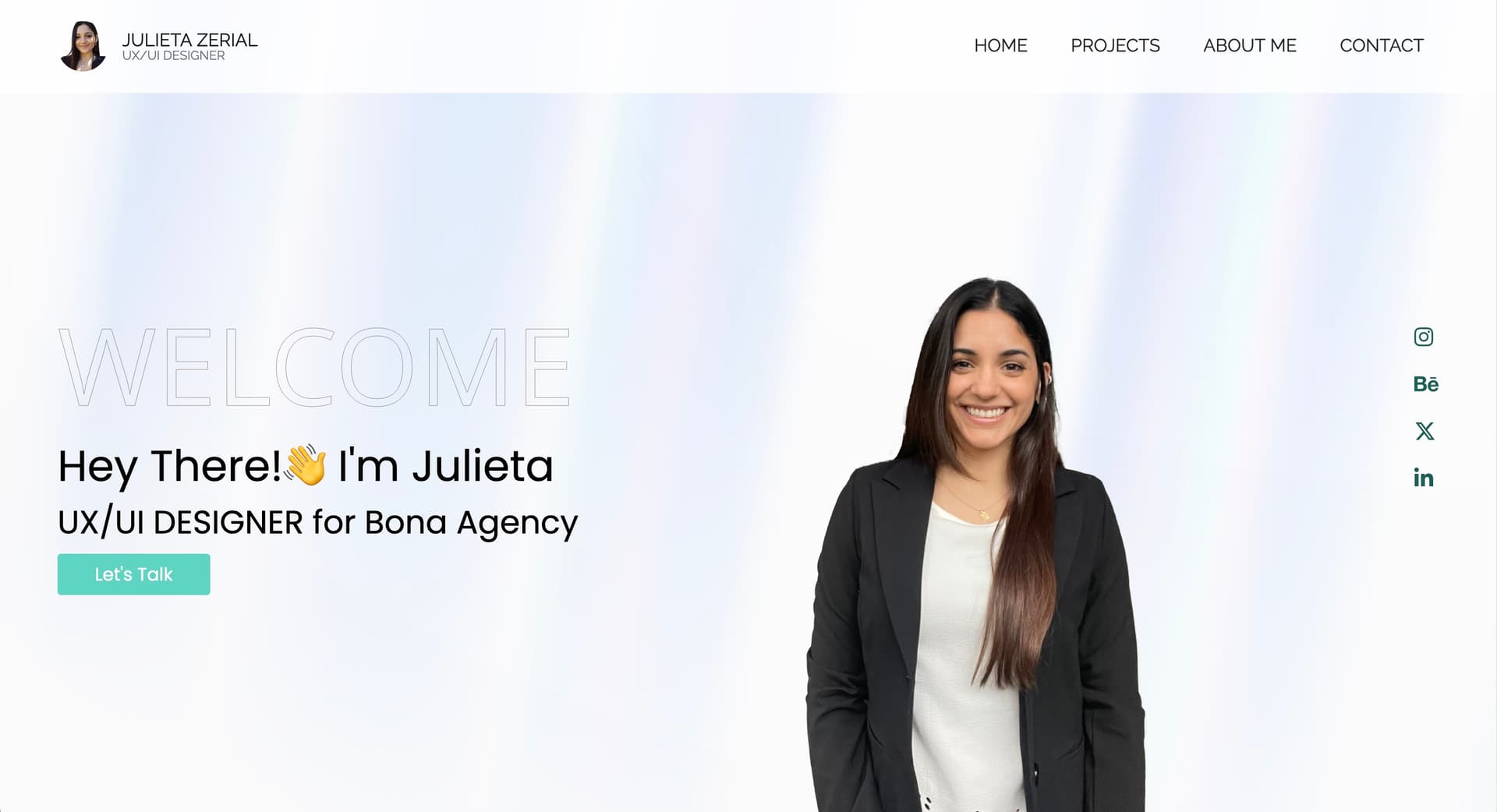
When a talented UX/UI designer approached us to build her portfolio website, the brief was clear but challenging: create a platform that doesn't just showcase her work—it needs to be her work. As someone who champions exceptional user experience, clarity, and accessibility in every project, her own website needed to embody these principles while standing out in a competitive design industry where first impressions determine opportunities.
The Designer's Portfolio Paradox
Designers face unique pressure when building their own portfolios. They're not just showing what they can do—they're proving it through the very experience they create. Every interaction, every transition, every typographic choice gets scrutinized by potential clients and employers who understand design intimately. A beautiful but slow portfolio suggests lack of technical understanding. A fast but generic one implies lack of creativity.
Here's what made this challenge complex: Julieta's previous online presence was fragmented across portfolio platforms that offered neither the flexibility to tell her story on her terms nor the technical foundation to rank well in search results. She needed a dedicated platform that was visually striking, technically excellent, SEO-optimized, and built to scale with her growing career—all while reflecting the design principles she advocates for in client work.
Understanding the Audience Spectrum
Potential Clients
Businesses hiring UX/UI designers want to see both creative vision and practical execution. They evaluate portfolios asking: Can this designer understand our users? Can they solve complex problems? Can they deliver work that's both beautiful and functional? The portfolio needed to answer these questions through demonstration, not declaration.
Prospective Employers
Agencies and companies hiring designers look for different signals: process documentation showing how designers think, versatility across project types and industries, technical understanding beyond visual design, and cultural fit indicated by communication style and values. The platform needed to communicate all these dimensions.
Fellow Designers
Peer recognition matters in design careers. Other designers viewing the portfolio would judge craft quality, interaction details, and whether the work represents genuine innovation or follows trends. The site needed to earn respect from those who understand design deeply.
Technical Foundation: Next.js and Performance
Next.js for Modern Web Development
We chose Next.js as the technical foundation for its server-side rendering capabilities, optimal performance characteristics, and developer experience. This wasn't arbitrary technology selection—it was strategic choice based on specific portfolio needs: SEO requirements, fast page loads, smooth transitions, and future scalability.
Server-Side Rendering for SEO
Designers get discovered through search. When potential clients search for UX designer portfolio or UI designer Amsterdam, visibility matters. We implemented Next.js's server-side rendering (SSR) to ensure search engines could fully crawl and index Julieta's work. This technical approach dramatically improves search rankings compared to client-side rendered portfolios that search engines struggle to understand.
Performance Optimization
Design portfolios are image-heavy by nature—high-quality project screenshots, case study visuals, and process documentation all require substantial bandwidth. We implemented comprehensive optimization strategies: Next.js Image component for automatic optimization and lazy loading, code splitting to load only necessary JavaScript, strategic caching for repeat visitors, and asset compression without quality loss.
Lightning-Fast Loading
The result: a portfolio that loads nearly instantly on all connection speeds. Fast loading isn't just technical achievement—it's user experience. Visitors exploring multiple projects don't wait between pages. This fluidity keeps attention focused on work rather than loading spinners.
Design System: Showcasing Through Doing
Responsive Architecture
We architected a completely responsive experience that works flawlessly across desktop workstations, tablets for casual browsing, and mobile devices for on-the-go portfolio sharing. The responsive design isn't just about scaling—it's about adapting content hierarchy and interaction patterns appropriately for each context.
Modular Project Showcase System
The portfolio needed flexibility as Julieta's work evolved. We built a modular system for presenting projects that allows easy updates and expansions. Each project can be showcased with custom layouts, multiple image formats, embedded videos, process documentation, and client testimonials—all managed through a structured system that maintains visual consistency.
Typography and Hierarchy
Typographic choices throughout the site demonstrate design thinking: clear hierarchies that guide attention, readable body text that respects visitors' time, and subtle animations that enhance rather than distract. Every typographic decision reinforces Julieta's design philosophy.
SEO Strategy: Discoverability Through Technical Excellence
Structured Data and Meta Tags
We implemented comprehensive SEO best practices: semantic HTML5 for proper content structure, meta descriptions optimized for search snippets, Open Graph tags for social sharing, and structured data markup helping search engines understand portfolio content. These technical details make the difference between appearing in search results and being invisible.
Performance as Ranking Factor
Google prioritizes fast websites in search rankings. Our performance optimizations weren't just about user experience—they directly improved SEO. Fast load times, optimized images, and efficient code all contribute to better search visibility.
Content Strategy for Discovery
Beyond technical SEO, we structured content to match how people search for designers: project case studies answering common design questions, clear service descriptions targeting relevant search terms, and About content that establishes expertise and credibility.
User Experience: Practice What You Preach
Intuitive Navigation
Visitors should find what they need without confusion. We designed navigation that's immediately clear: projects organized logically, About section providing context, contact information easily accessible, and filtering options for exploring work by type or industry.
Subtle Animation and Interaction
As a UX/UI designer, Julieta understands that animation should enhance, not distract. We implemented subtle transitions between pages, hover states that provide feedback, and scroll-triggered reveals that create rhythm—all calibrated to feel polished without overwhelming.
Accessibility Standards
Accessibility isn't optional in good design. The portfolio implements proper heading hierarchy for screen readers, sufficient color contrast for readability, keyboard navigation support, and alt text for all images. These considerations demonstrate design maturity and professional commitment.
Content Presentation: Narrative-Driven Case Studies
Project Case Studies
Each portfolio piece tells a complete story: the client challenge or opportunity, research and discovery process, design decisions and rationale, final solution and outcomes. This narrative approach helps potential clients understand how Julieta works—not just what she produces.
Process Documentation
Showing finished designs is standard. Showing how you arrived there differentiates. We structured case studies to include wireframes, iterations, user research insights, and design system thinking—demonstrating thorough, strategic approach that clients and employers value.
Visual Impact
While content matters, design portfolios are visual by nature. High-quality project imagery takes center stage, presented with generous white space and thoughtful layouts that let work speak for itself.
The Results: Portfolio as Business Tool
Improved Discoverability
SEO optimization paid immediate dividends. Julieta's work now appears in search results for relevant design queries, driving organic traffic from potential clients discovering her through search rather than only through referrals or social media.
Professional Positioning
The polished, high-performance portfolio elevated Julieta's professional positioning. Rather than competing on fragmented platforms where work gets lost among thousands of others, she now controls her narrative through a dedicated platform that reflects her quality standards.
Client Confidence
Prospective clients exploring the portfolio see someone who practices what she preaches—designing experiences that are both beautiful and functional. The portfolio itself becomes proof of capability, answering questions before they're asked.
Career Opportunities
The combination of great work presentation and strong SEO opened doors to collaboration opportunities, speaking engagements, and client inquiries from organizations specifically seeking her design approach.
Lessons from Designer Portfolios
Your Portfolio Is Your Product
For designers, the portfolio isn't just marketing—it's the product. Every decision about performance, usability, and aesthetics gets evaluated as evidence of your capabilities. There's no hiding behind the client wanted it that way.
Technical Excellence Matters
Design portfolios need strong technical foundations. Beautiful work presented on slow, poorly optimized platforms undermines credibility. Modern web technologies enable both visual excellence and technical performance.
SEO Drives Discovery
Even the best portfolio is worthless if nobody sees it. Strategic SEO ensures your work gets discovered by people actively searching for designers with your skills and approach.
Flexibility Enables Growth
Designers' careers evolve. Portfolio systems need to accommodate new projects, different presentation styles, and changing professional focus without requiring complete rebuilds.
Ready to Build a Portfolio That Works as Hard as You Do?
For Designers: Your work deserves presentation that matches its quality. A portfolio built on modern technology with strategic SEO doesn't just look good—it actively drives your career forward by ensuring the right people discover your work.
For Creative Professionals: Whether you're a designer, developer, writer, or any creative professional, your online presence should reflect your best work and make it easy for opportunities to find you.
Ready to create a portfolio that's both beautiful and discoverable? Book a strategy session with Bona and let's build a platform that showcases your expertise while driving real business results. Because great work deserves to be seen by people who appreciate it.