Vision ESG
01 June 2023 • Paolo & Julieta • SEO & Growth
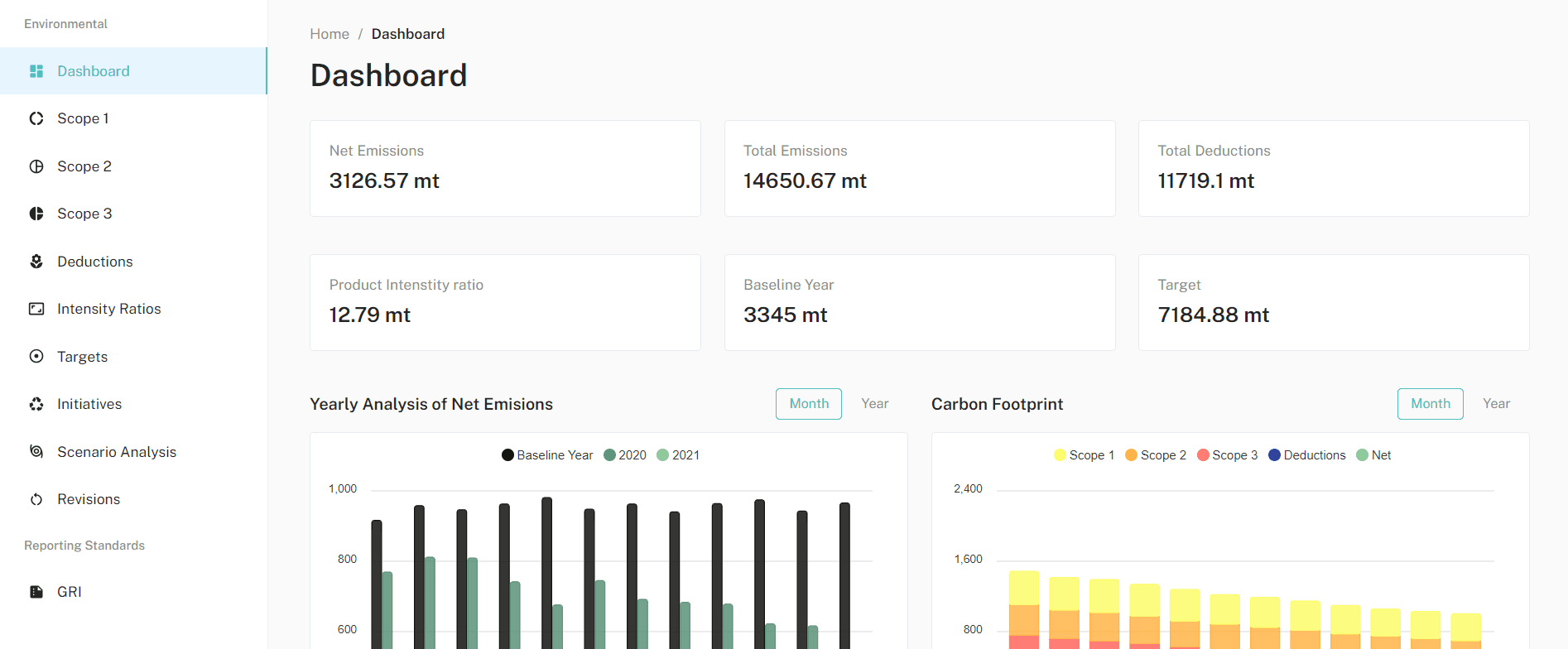
Vision ESG came to us with a mission-critical challenge: businesses needed powerful tools to track Environmental, Social, and Governance metrics, but existing solutions were either too complex for newcomers or too rigid for professionals. They envisioned a platform that combined accurate, real-time environmental data with an interface so intuitive that sustainability teams could make informed decisions instantly—regardless of their technical expertise.
The Data Complexity Challenge
ESG tracking sits at the intersection of regulatory compliance, corporate responsibility, and competitive advantage. Organizations need to monitor countless metrics across environmental impact, social initiatives, and governance structures—then report this data to stakeholders, investors, and regulatory bodies with precision and clarity.
Here's what made it complex: The platform had to handle massive, continuously updating datasets while presenting information in ways that made patterns immediately visible. Users ranged from seasoned ESG professionals analyzing granular trends to executives needing high-level snapshots for board presentations. One interface needed to serve both audiences without compromising either experience.
Understanding the User Spectrum
The ESG Professional
Experienced sustainability managers need deep data access. They track specific metrics over time, compare performance across business units, and generate detailed reports for regulatory filings. For them, the platform needed sophisticated filtering, customizable views, and export capabilities that maintained data integrity.
The Executive User
Leadership teams need clarity, not complexity. They want to understand overall performance, identify problem areas, and communicate progress to boards and investors. For them, the platform needed high-level visualizations that told the sustainability story at a glance while allowing drill-downs when questions arose.
The Newcomer
Organizations just beginning their ESG journey often lack dedicated sustainability teams. These users need guidance—interfaces that educate while they navigate, clear explanations of what metrics mean, and intuitive flows that prevent confusion. The platform couldn't assume expertise.
Building for Performance and Clarity
Modern Technology Foundation
We built the front-end using modern web technologies chosen specifically for their performance characteristics and developer experience. The stack needed to handle real-time data updates smoothly, render complex visualizations without lag, and maintain responsiveness across devices from desktop workstations to tablets in boardrooms.
Responsive Design Architecture
ESG data gets accessed everywhere: sustainability managers at desks analyzing trends, executives reviewing dashboards on tablets during flights, and teams collaborating on mobile devices during site visits. We architected a fully responsive interface that adapts intelligently—not just resizing elements, but restructuring information hierarchy based on screen size and context.
Security and Scalability
ESG data is business-critical and often confidential. We implemented industry best practices for security, ensuring data transmission encryption, secure authentication, and role-based access controls. The architecture was designed to scale—handling growing datasets and increasing user bases without performance degradation.
Data Visualization: Making Complexity Comprehensible
Interactive Charts and Metrics
We integrated advanced data visualization tools that update in real-time. Users can explore trends through interactive line charts, compare performance with stacked bar graphs, and identify outliers through heat maps—all responding instantly to filter changes and date range selections. The visualizations aren't just pretty; they're functional tools for insight discovery.
Progressive Disclosure
Rather than overwhelming users with every metric simultaneously, we implemented progressive disclosure. High-level dashboards provide overview snapshots with clear visual indicators (green for on-track, yellow for attention needed, red for urgent). Users can click through to detailed views only when needed, maintaining clarity while preserving depth.
Contextual Information
Complex metrics need context. We added tooltips, explanatory text, and benchmark comparisons that help users understand not just what the numbers are, but what they mean. Is this carbon emission level good or concerning? How does it compare to industry standards? The interface answers these questions without requiring external research.
Performance Tracking and Reporting
Real-Time Updates
ESG metrics change continuously as new data flows in from sensors, surveys, and operational systems. The platform updates in real-time, ensuring users always see current information. No stale data, no manual refreshes—just accurate, up-to-the-moment insights.
Instant Report Generation
Stakeholders need reports: quarterly board updates, annual sustainability disclosures, investor briefings. We built instant reporting capabilities that generate professional PDFs, spreadsheets, and presentations directly from current data. Users select metrics, choose time periods, and receive formatted reports ready for distribution.
Custom Dashboard Creation
Different roles need different views. Sustainability managers might focus on granular environmental metrics while CFOs care about ESG-related financial risks. We enabled custom dashboard creation, allowing users to build personalized views focused on their specific responsibilities and interests.
Collaboration and Workflow Integration
Team Collaboration Features
ESG isn't one person's job—it requires cross-functional coordination. The platform includes annotation tools for flagging concerns, commenting on trends, and sharing insights with colleagues. Teams can collaborate on improvement initiatives directly within the data context.
Goal Setting and Tracking
Organizations set sustainability targets: reduce emissions by X%, increase diversity by Y%, improve governance scores by Z%. The platform tracks progress toward these goals with clear visualizations showing trajectory and predicted achievement dates based on current trends.
Alert and Notification System
Sustainability teams can't constantly monitor dashboards. We built smart alerting that notifies users when metrics cross thresholds, trends move in concerning directions, or reporting deadlines approach. Proactive notifications prevent problems from escalating.
The Results: Actionable Sustainability Insights
Immediate Clarity
Users no longer struggle to understand their ESG performance. The dashboard transforms raw data into clear narratives: "Your carbon emissions decreased 12% this quarter" is more actionable than a spreadsheet of numbers.
Faster Decision Making
With real-time data and intuitive visualizations, sustainability teams identify issues and opportunities faster. What once required days of data analysis now takes minutes of dashboard exploration.
Increased Accountability
Transparent, accessible data drives accountability. When everyone from sustainability managers to C-suite executives can see the same metrics, sustainability becomes a shared organizational priority rather than a compliance checkbox.
Scalable Foundation
As Vision ESG grows—adding users, integrating more data sources, expanding metric coverage—the platform architecture scales smoothly. The technical foundation supports today's needs while accommodating tomorrow's requirements.
Lessons from Building Data Platforms
Complexity Requires Clarity
The more complex the underlying data, the simpler the interface must be. Users shouldn't need to understand database schemas or data science to extract insights. Great platforms hide complexity while revealing understanding.
Performance Is a Feature
In data-heavy applications, speed isn't a nice-to-have—it's essential. Slow dashboards frustrate users and discourage exploration. When visualizations update instantly, users dig deeper and discover more insights.
Design for the Spectrum
Platforms serving users with varying expertise levels need flexible interfaces. Don't dumb down for beginners or overwhelm experts. Create layered experiences where users can go as deep as their needs require.
Real-Time Matters in ESG
Sustainability isn't static. Organizations need current data to respond to issues, capitalize on improvements, and report accurately. Real-time platforms enable proactive rather than reactive sustainability management.
Ready to Transform Your Data into Insights?
For Sustainability Teams: Your ESG data holds answers to critical questions—but only if you can access and understand it. The right platform turns data from a compliance burden into a strategic asset.
For Technology Leaders: Building data platforms requires balancing technical performance with user experience. When both work together, you create tools people actually use rather than tolerate.
Need a powerful, intuitive platform for complex data? Book a strategy session with Bona and let's discuss how to transform your data challenges into competitive advantages. Because in 2025, data without clarity is just noise—and great platforms turn noise into knowledge.